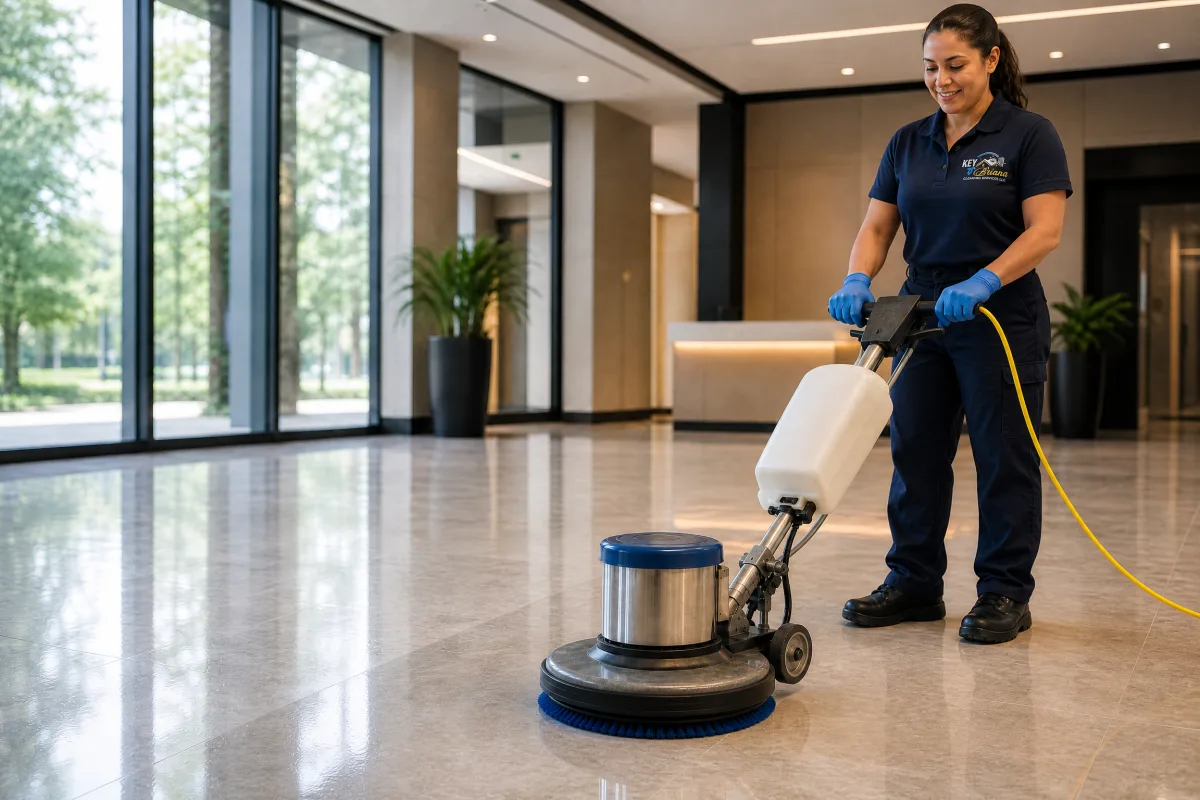
Strip & Wax
We strip off old, yellowed wax buildup down to the bare floor, then lay down fresh coats for a deep, even shi…
Strip & Wax in NashvilleSealing is what stands between your floor and everything that happens on it. A sealer closes the porous surface of tile, grout or concrete so spills sit on top long enough to be wiped up instead of soaking in, and a finish on top takes the daily abrasion that would otherwise wear the material itself. It is the least visible service we offer and one of the most economical, because the cost of sealing a floor is small next to the cost of replacing one.
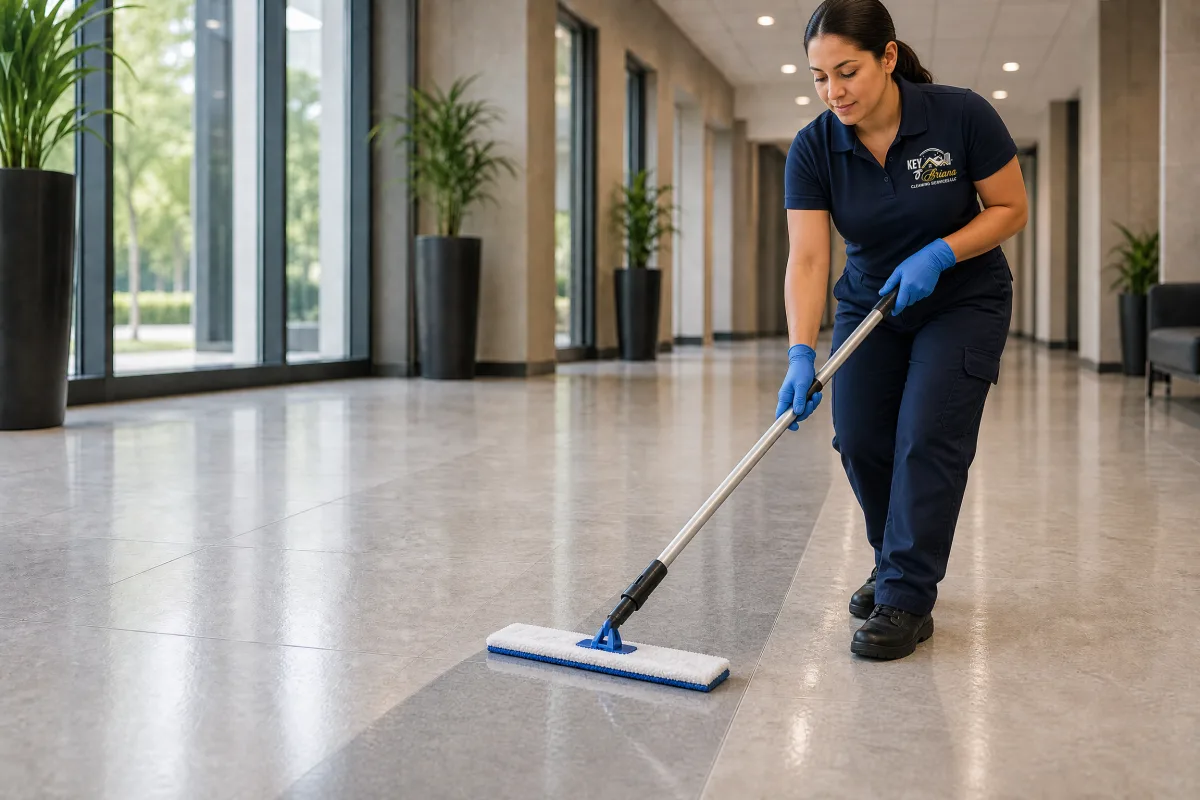
Tile, grout, natural stone and concrete are porous. At a scale you cannot see, the surface is full of openings, and every liquid that lands on it starts working its way in immediately. That is why a spill wiped up straight away can still leave a shadow, and why grout that started out light gray ends up nearly black along the busiest line in the room. The dirt is not on the floor. It is in it, and once it is in there no amount of mopping reaches it.
Sealing closes those openings. The floor stops absorbing and starts repelling, which turns a permanent problem into a temporary one.
Worth knowing, because the words get used interchangeably.
A sealer penetrates the material and protects it from the inside. It is largely invisible and it is the part doing the structural work.
A finish sits on top as a sacrificial layer. It takes the scuffs and the abrasion so the floor underneath does not, and when it wears down it gets renewed without touching the material below.
Many floors want both. Which combination depends entirely on what the floor is made of and what happens on it, and that is a decision we make after looking at the floor, not from a catalog.
New tile, new concrete and newly regrouted floors should be sealed before they go into service. It costs the same as sealing them later and it is the only time the material is genuinely clean — sealing an already-stained floor locks in whatever is in there. If your floor is new, this is the window.
Anywhere from a couple of years to several, depending on the sealer, the material and the traffic. The floor tells you when it is time: water that used to bead starts sinking in instead. That simple test is worth doing once a year. A few drops of water on the busiest part of the floor — if it soaks in and darkens the surface, the sealer has given up.
On tiled floors, grout is more porous than the tile it sits between and it is almost always what makes an otherwise clean floor look dirty. Sealing the grout is what keeps a tiled floor looking new for years instead of months, and it is the step most often skipped by whoever installed it.
“Key Briana's team left my home spotless. They were on time, professional, and paid attention to every detail. I couldn't be happier!”
Sarah M. — Homeowner
“We use them for our office weekly and the difference is night and day. Reliable, thorough, and always friendly. Highly recommend.”
James R. — Office Manager
Put a few drops of water on the busiest part of the floor. If they bead up, the sealer is still doing its job. If the water soaks in and darkens the surface, it is time. Worth checking once a year.
A sealer soaks into the material and protects it from the inside — it is mostly invisible. A finish sits on top as a sacrificial layer that takes the scuffs so the floor does not. Many floors want both.
Yes, before it goes into service. It costs the same as doing it later and it is the only moment the material is genuinely clean. Sealing a floor that has already stained locks the stain in.
Yes, and on a tiled floor it is usually the part that matters most. Grout is more porous than the tile around it, which is why it darkens first and makes an otherwise clean floor look dirty.
Every space is different, so we look at yours before quoting. Send us your request and our team gets back to you with the exact cost — no obligation.
We strip off old, yellowed wax buildup down to the bare floor, then lay down fresh coats for a deep, even shi…
Strip & Wax in Nashville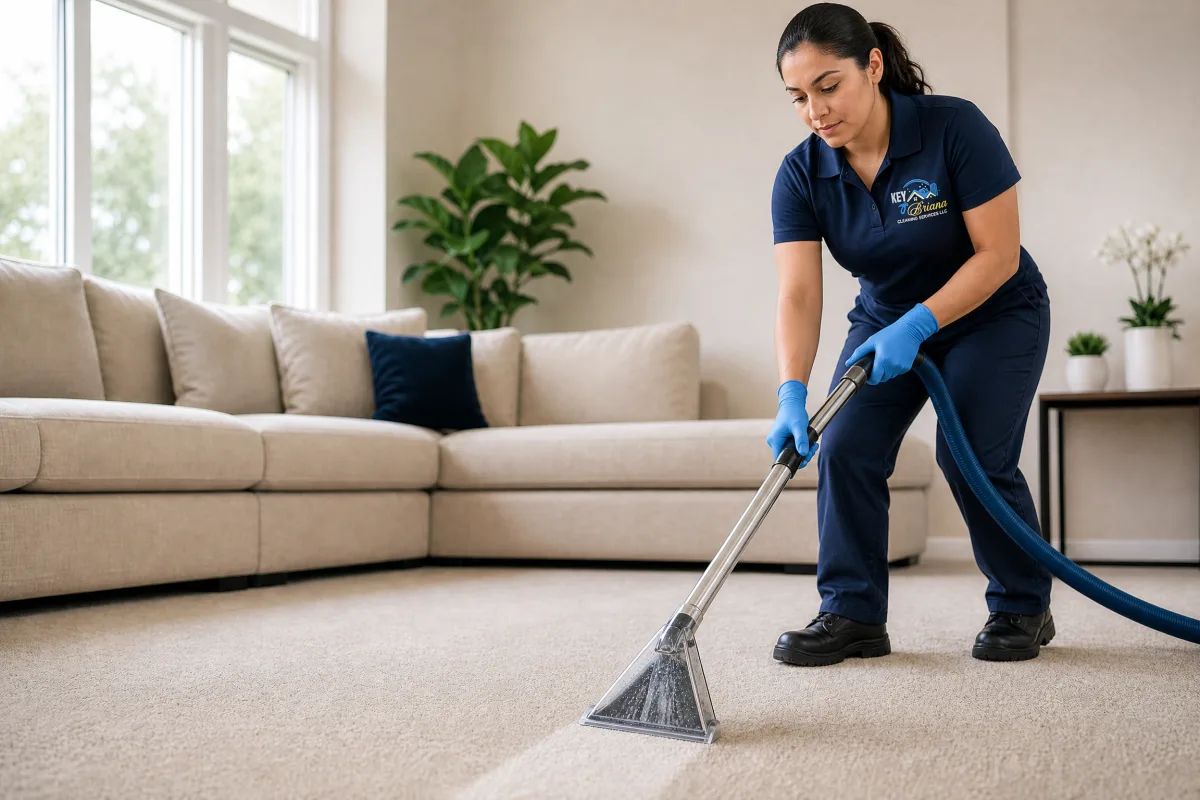
Deep extraction that pulls out ground-in dirt, stains and odors instead of just brushing the surface. Great f…
Carpet Cleaning in Nashville
Streak-free interior and exterior glass, including sills and frames, so the whole space feels brighter the mo…
Window Cleaning in Nashville